
| BACK |
| NEXT |
|
103 Retrospective  A few months before Reich’s death in 2010, a 50-year retrospective of his work was mounted in a Sacramento gallery. Works were borrowed from all over the country.
In her extensive review of the exhibition, Dalkey stressed intensity, feeling and independence.
She says he thinks of his paintings as “healing devices,” and quotes him:
“It’s for your own good. You might not like this, but I’m going to give you this spoonful of medicine, and you’re going to take it and get well.”
Dalkey was fascinated by Reich’s life-long return to certain “themes and modes,” such as “linear striped landscapes.”
His continual looking back as he surged forward gave his art a wholeness. Just as his steadfast retention of long-distance
friendships gave his life a wholeness.
Unlike I who see my life as a series of distinct segments, marked off by ambient culture, he was constantly guided by his own imagination.
He told Dalkey about the Roman signal tower we climbed in the Balearic Islands, a reference point for his abstract work called “Night Signal” painted decades later.
“For me, it’s a good sign,” he told Dalkey.
“It’s my light, and I’m beaming it down the coast.” A few months before Reich’s death in 2010, a 50-year retrospective of his work was mounted in a Sacramento gallery. Works were borrowed from all over the country.
In her extensive review of the exhibition, Dalkey stressed intensity, feeling and independence.
She says he thinks of his paintings as “healing devices,” and quotes him:
“It’s for your own good. You might not like this, but I’m going to give you this spoonful of medicine, and you’re going to take it and get well.”
Dalkey was fascinated by Reich’s life-long return to certain “themes and modes,” such as “linear striped landscapes.”
His continual looking back as he surged forward gave his art a wholeness. Just as his steadfast retention of long-distance
friendships gave his life a wholeness.
Unlike I who see my life as a series of distinct segments, marked off by ambient culture, he was constantly guided by his own imagination.
He told Dalkey about the Roman signal tower we climbed in the Balearic Islands, a reference point for his abstract work called “Night Signal” painted decades later.
“For me, it’s a good sign,” he told Dalkey.
“It’s my light, and I’m beaming it down the coast.”
|
104 In the last faltering years of his life, Reich did at least two series of paintings that seemed to bear little resemblance to what had gone on before.
In one small group of pastels and paintings, he employed simple repeated patterns, like the kind of photographs National Geographic favors, with strongly sustained color themes -- purple, red.
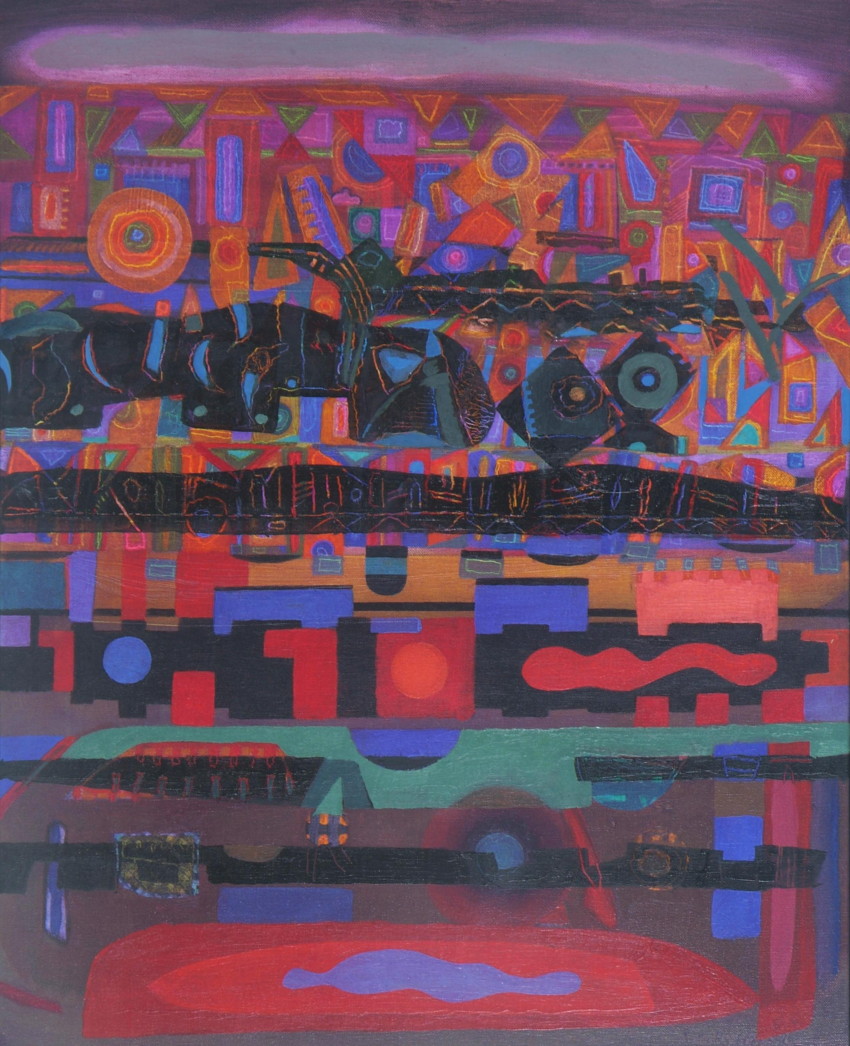
Untitled, 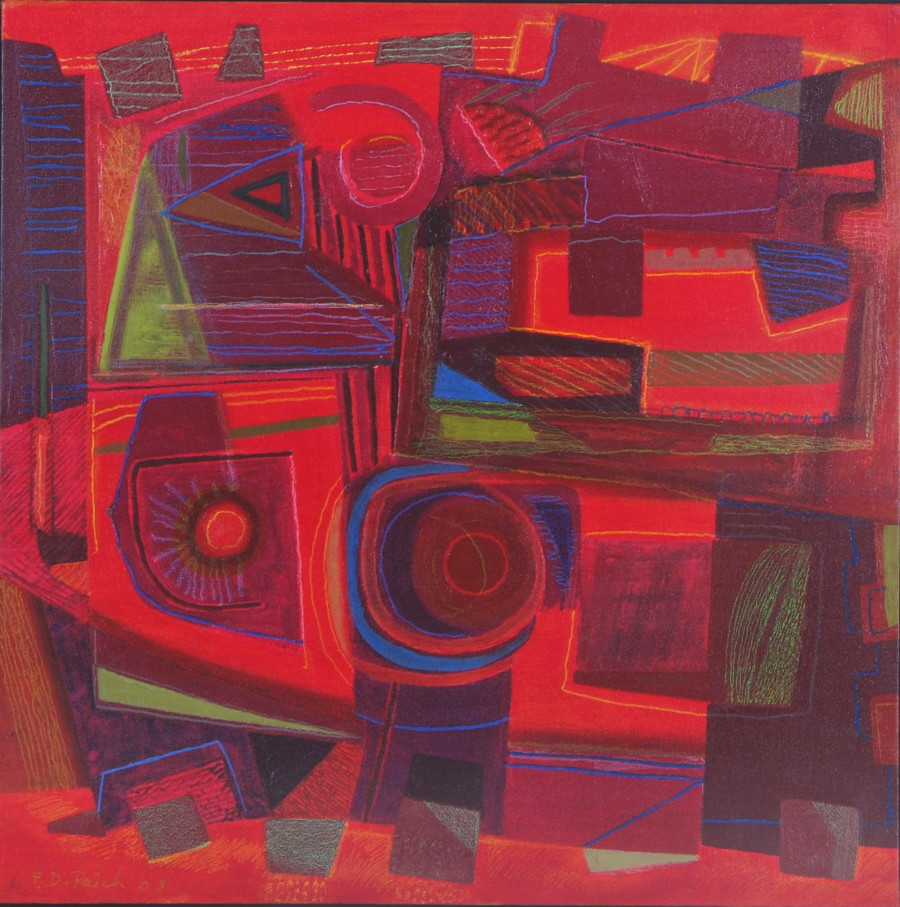
Untitled, 2009 |
| BACK | 
| NEXT |