
| BACK |
| NEXT |
|
45 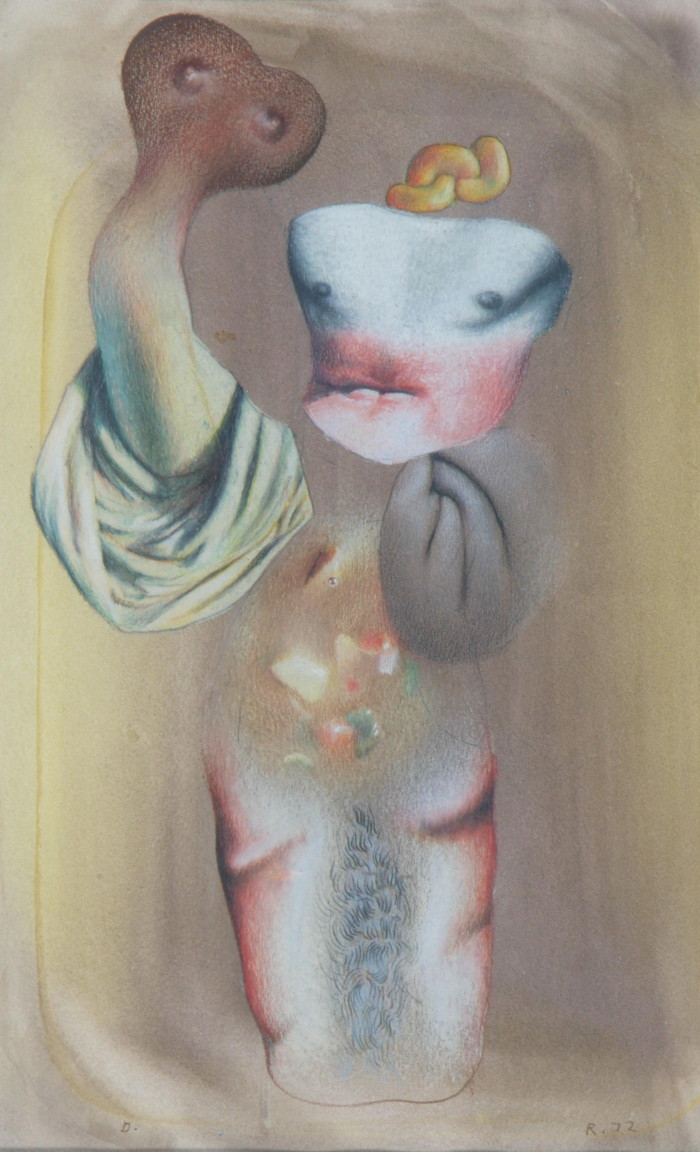
I miss liberty, 1972 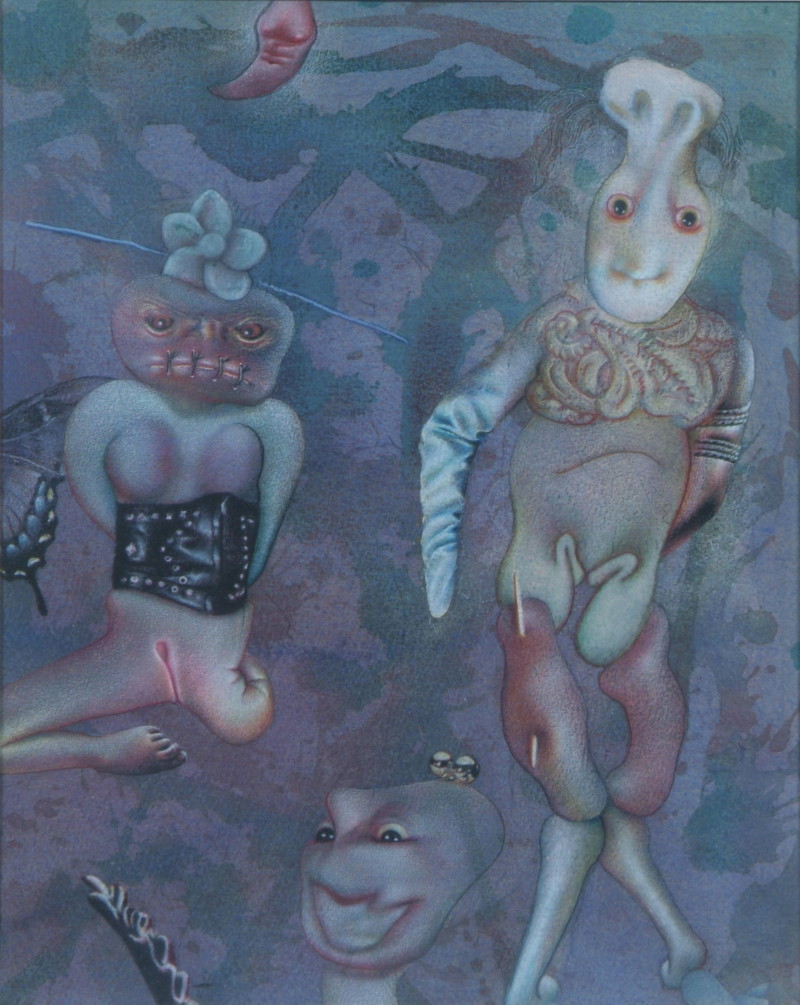
Catalogue of the Stars, 1979 Detail |
46  In a review I wrote of a show in 1970, I saw surrealism -- “…images of real objects , arranged in ways that do not occur in the real world, jogging our minds into the world of mystery and meaning that arises from the juxtaposition of two otherwise unrelated objects.”
It was not exactly evident, but Reich was certainly intent on defeating neorealism by subverting it. His attitude was, “You want realism? How about this, asshole?”
He derided the notion of reality as an artifact of advertising, studio photography, high-tech printing. His approach was as old as the ancient Greek painters’ -- to make a picture that would mimic reality so precisely, so convincingly,
so confoundingly that the viewer doesn’t know he’s being played with.
In their final form, the renderings consist of depictions or copies of fragments cut out of high-resolution magazine lithography. He strove not to depict the objects depicted by the printed illustrations, but the entire
enterprise of commercial art, starting with juiced-up photography and lighting, the printing processes, on through the way the printed image played on the banana or package label or armpit hair or Jim Nutt’s nose.
But the objects depicted in Reich’s renderings were not the armpit hair, etc., but the printed magazine image itself, cut out, its edges -- and the shadows cast by the edges -- so clearly duplicated that sometimes
one has to touch them to be sure they are not collaged pieces, with their cunning shadows and incisions and shadows of incisions. Gotcha.
In a review I wrote of a show in 1970, I saw surrealism -- “…images of real objects , arranged in ways that do not occur in the real world, jogging our minds into the world of mystery and meaning that arises from the juxtaposition of two otherwise unrelated objects.”
It was not exactly evident, but Reich was certainly intent on defeating neorealism by subverting it. His attitude was, “You want realism? How about this, asshole?”
He derided the notion of reality as an artifact of advertising, studio photography, high-tech printing. His approach was as old as the ancient Greek painters’ -- to make a picture that would mimic reality so precisely, so convincingly,
so confoundingly that the viewer doesn’t know he’s being played with.
In their final form, the renderings consist of depictions or copies of fragments cut out of high-resolution magazine lithography. He strove not to depict the objects depicted by the printed illustrations, but the entire
enterprise of commercial art, starting with juiced-up photography and lighting, the printing processes, on through the way the printed image played on the banana or package label or armpit hair or Jim Nutt’s nose.
But the objects depicted in Reich’s renderings were not the armpit hair, etc., but the printed magazine image itself, cut out, its edges -- and the shadows cast by the edges -- so clearly duplicated that sometimes
one has to touch them to be sure they are not collaged pieces, with their cunning shadows and incisions and shadows of incisions. Gotcha.
|
| BACK | 
| NEXT |